Black Peak Expedition: Complete Climbing Guide to Kala Nag (6,387 m)
Rising like a dark sentinel over the Bandarpoonch massif on the Himachal-Uttarakhand border, Black Peak — known locally as Kala Nag, meaning “Black Cobra” — is one of the most respected entry-to-intermediate mountaineering objectives in the Indian Himalayas. Its striking dark rock face, glaciated upper slopes, and genuinely technical summit day have made it a rite of passage for climbers looking to move beyond high-altitude trekking into real mountaineering. This guide covers everything you need to plan and prepare for the climb.
Overview: Why Climb Black Peak?
Black Peak isn’t just another trekking peak with a fancy name. At 6,387 metres, it offers a complete mountaineering experience — long approach trekking through alpine meadows and river valleys, a properly established base camp and advanced base camp system, glacier travel, and a summit day that genuinely tests rope skills, stamina, and decision-making under pressure. It sits close to Bandarpoonch and Swargarohini, two other formidable peaks, and the approach trail winds through some of the most scenic high-altitude terrain in the Garhwal Himalayas.
Black Peak Height and Altitude
Black Peak stands at 6,387 metres (20,955 feet) above sea level. This altitude places it firmly in the category of a serious Himalayan peak — high enough to demand proper acclimatization, but still within reach of well-prepared climbers without requiring supplemental oxygen or expedition-style siege tactics. The final summit ridge and approach involve sustained time above 5,500 m, where altitude-related fatigue and reduced oxygen become real factors in decision-making.
Location
Black Peak sits on the border of Uttarakhand’s Garhwal region, near the Har Ki Dun and Ruinsara valleys, close to the Bandarpoonch massif. It falls within the Govind Wildlife Sanctuary and National Park, which is part of why permits for this region carry additional conservation-related requirements.
Route and Itinerary
The standard climbing route to Black Peak follows this general structure:
- Sankri Village – The expedition typically begins here, a small mountain village that also serves as the base for the popular Har Ki Dun trek.
- Taluka to Osla – Trekking through pine and deodar forests along the Supin River.
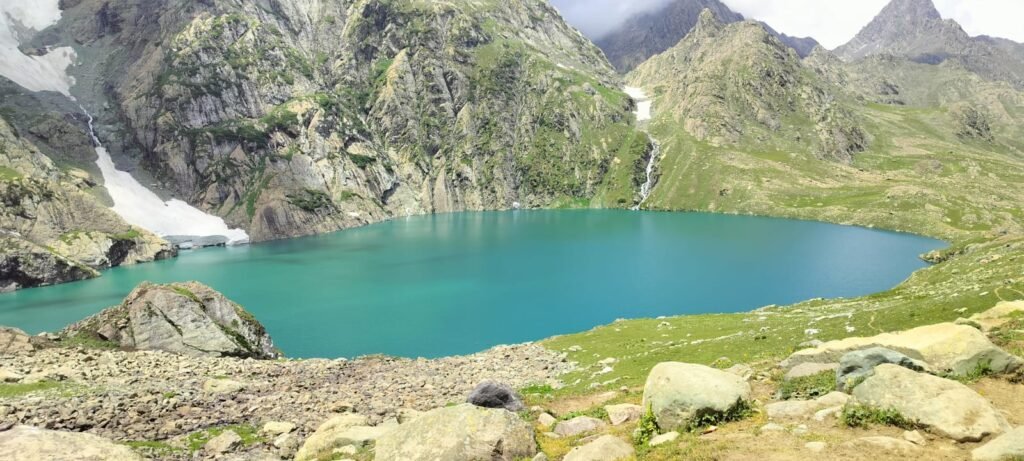
- Osla to Ruinsara Tal – A stunning high-altitude lake surrounded by meadows, often used as an intermediate acclimatization stop.
- Ruinsara Tal to Base Camp – The trail moves into more rugged, glacial terrain as you gain altitude.
- Base Camp to Advanced Base Camp (ABC) – Climbers spend a day or two here for acclimatization and skill refreshers (rope fixing, crampon use, ice-axe arrest).
- Summit Push – A pre-dawn start from ABC (or a higher camp) leads climbers across glaciated terrain, up a moderately steep snow/ice slope, and along a final ridge to the summit.
- Descent and Return – Climbers retrace their steps back to Sankri over several days, with a buffer day typically built in for weather delays.
The full expedition typically spans 15 to 18 days, including acclimatization rotations, weather buffer days, and the trek back out.
Black Peak Trek Distance
The total distance covered during the expedition — from Sankri to the summit and back — is approximately 75 to 85 km. This includes the multi-day approach trek, the rotations between base camp and higher camps for acclimatization, and the final summit push and descent.
Best Time to Visit Black Peak
The best time to visit for the Black Peak expedition is during two main windows:
- Late May to June, after winter snow has stabilized but before monsoon rains set in
- September to early October, after the monsoon clears and before winter snowfall makes the route inaccessible again
Climbing during the monsoon months of July and August is generally avoided, as trails become slippery and unstable, river crossings swell dangerously, and visibility on the glacier sections drops significantly, increasing the risk of crevasse-related accidents.
Weather Conditions
Weather on Black Peak can change rapidly, even within the recommended climbing windows. Base camp temperatures during the day in peak season typically range from 10-15°C, dropping close to freezing at night. Higher up, near advanced base camp and on summit day, temperatures can fall well below freezing, especially before dawn when most summit pushes begin. Wind exposure on the upper ridge is a significant factor, and sudden weather shifts — including unseasonal snowfall — are possible even in what’s considered peak season.
Snow and Glacier Conditions
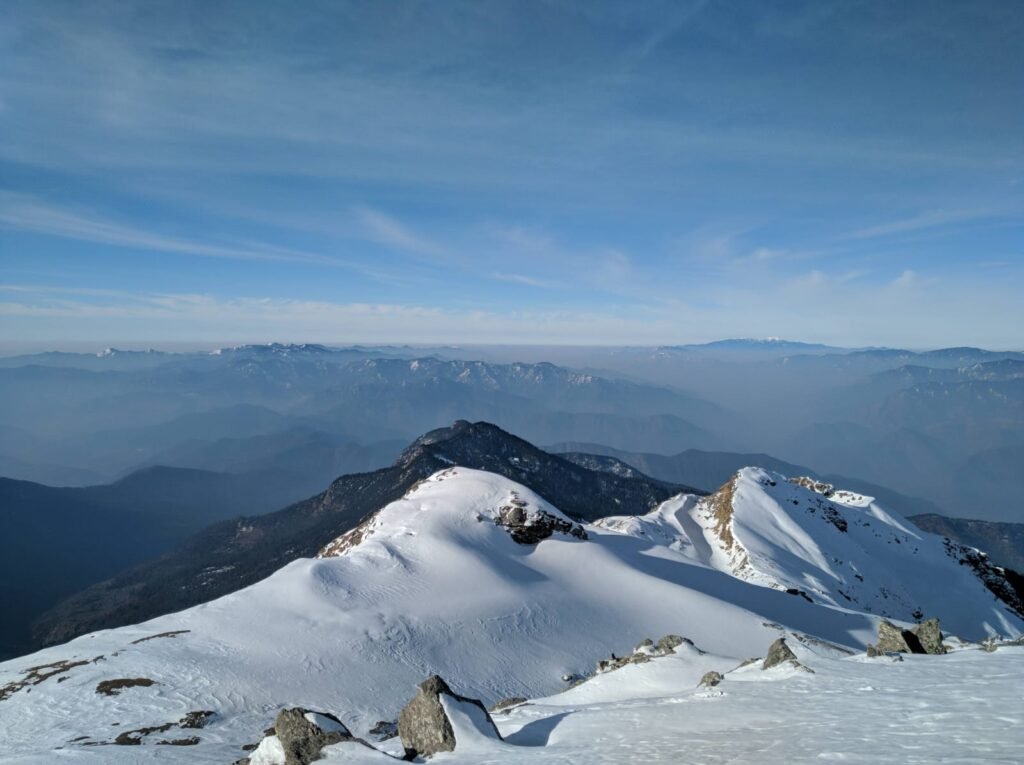
Black Peak’s upper reaches feature permanent snow and glacier cover, meaning climbers will encounter real glacier travel with crevasse exposure, particularly between advanced base camp and the summit ridge. Proper roped travel, crevasse rescue awareness, and comfort walking in crampons on mixed snow and ice terrain are essential. Snow conditions vary from firm, easier-to-walk névé in the early morning to softer, more exhausting snow later in the day — which is why summit pushes typically begin well before sunrise.
Fitness Level Required
Black Peak demands a high level of physical fitness. Climbers should be comfortable with:
- Long trekking days (6-8 hours) carrying a daypack over multiple consecutive days
- Cardiovascular endurance suited to sustained effort at altitude
- Leg strength for steep ascents and descents on loose scree and snow
- Core strength and balance for glacier travel and rope-assisted sections
A structured pre-expedition training regime of at least 8-12 weeks — combining cardio, strength training, and stair/hill climbing with a loaded backpack — is strongly recommended.
Experience Level Needed
This is not a beginner peak. While it doesn’t require prior 6,000 m+ summit experience, climbers should ideally have:
- Completed at least one high-altitude trek above 4,500-5,000 m
- Basic exposure to mountaineering techniques (ice-axe use, crampon walking, rope work), often gained through a Basic Mountaineering Course (BMC)
- Comfort with exposure and steep terrain, since summit day involves real consequences for mistakes
Most reputable operators run a skills-refresher session at base camp or advanced base camp before the summit push, but arriving with zero prior exposure to these techniques significantly increases risk and reduces your chances of a successful, safe summit.
Difficulty Rating
Black Peak expedition is generally rated as a difficult expedition on the spectrum of Indian trekking peaks. The combination of altitude, sustained glacier travel, a technical summit ridge, and the sheer length of the expedition places it above beginner peaks like Friendship Peak, but it remains achievable for well-prepared, moderately experienced climbers without requiring the extreme technical skill needed for peaks above 7,000 m.
IMF Permits and Regulations
Climbing Black Peak requires an official permit from the Indian Mountaineering Foundation (IMF), since it falls under the category of peaks regulated for foreign and domestic mountaineering expeditions. Because the route passes through the Govind Wildlife Sanctuary and National Park, climbers also need:
- Forest department permits
- Wildlife sanctuary entry permissions
- In some cases, a liaison officer or local guide requirement depending on group composition and nationality of climbers
Most established trekking and expedition companies handle this permit paperwork as part of their package, but it’s worth confirming well in advance, as processing can take time, especially during peak season when many groups are applying simultaneously.
Equipment Checklist
A basic equipment list for Black Peak includes:
- Technical gear: Ice axe, crampons, climbing harness, carabiners, ascender/jumar, helmet
- Clothing: Down jacket, insulated summit suit or layered thermal system, waterproof shell jacket and pants, gloves (liner + insulated), balaclava, UV-protection sunglasses/goggles
- Footwear: Insulated mountaineering boots compatible with crampons
- Camping gear: Four-season sleeping bag rated to at least -15°C, sleeping mat, headlamp with spare batteries
- Personal: Trekking poles, sunscreen, lip balm with SPF, water bottles/hydration bladder, personal first-aid and altitude medication (as advised by a doctor)
Most operators provide group climbing equipment (ropes, tents, stoves), but personal technical gear and clothing are usually the climber’s responsibility, either brought from home or rented locally in Dehradun or Sankri.
How Black Peak Compares to Other Peaks
Compared to beginner peaks like Friendship Peak (5,289 m) near Manali, Black Peak expedition is considerably higher, longer, and more technically demanding. Compared to intermediate peaks like Deo Tibba (6,001 m) or Yunam Peak (6,111 m), Black Peak sits at a similar or slightly higher altitude but generally involves a longer approach and a more sustained glacier crossing on summit day. It’s often considered a natural progression peak for climbers who’ve already completed one or two 6,000 m expeditions and are looking for a slightly more serious technical and physical challenge before attempting 7,000 m peaks like Mt Satopanth.
Final Thoughts
The Black Peak expedition to Kala Nag offers a genuinely complete Himalayan mountaineering experience — remote approach trekking, real glacier travel, and a summit day that demands both technical skill and mental resilience. It rewards climbers who put in proper physical preparation and arrive with at least basic mountaineering exposure, offering one of the most satisfying intermediate summits in the Indian Himalayas. Choose your climbing window carefully (May-June or September-October), climb with an experienced, IMF-registered operator, and respect the mountain’s changeable weather and glacier conditions — and Black Peak will reward you with one of the most memorable summits of your climbing life.